Rumi
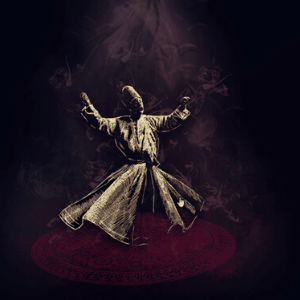
Who is Rumi?
Where was Rumi born?
Born on 30th September 1207, Rumi was born in a province called Balkh which is located in what is modern-day Afghanistan. The exact place of his birth is contested, however. Some say he was originally from the town of Balkh itself, which was the provincial capital while others argue that he was born in a small village close to the Vakhsh River. Although many villages could lay claim to being the birthplace of the great writer and teacher, Wakhsh - which is actually in modern-day Tajikistan – seems to be most likely.
Why is Rumi so popular?
Rumi wrote in Persian, and his words are often considered to be peerless among writers working in that language. This alone would account for a great deal of his popularity. However, the great poet also worked in other tongues from time to time, which helped to spread his reputation during his lifetime and beyond. For example, he wrote in Arabic, which meant his ideas reached a much wider readership. In addition, Rumi was known to have written in Turkish and Greek, helping him to become more widely known in the Mediterranean world.
What did Rumi say about love?
Overall, Rumi’s various poetic spoke of a sort of love which could infuse the whole world. He interpreted love as something that was necessarily bound up with the oneness of God, known as the concept of tawhid in Islam. According to the poet’s teachings, gaining a deeper understanding of tawhid was possible through love. He wrote of love as a flame which burned away everything other than the ‘Everlasting Beloved’.
What was the legacy of Rumi?
Quite apart from being a huge influence on Sufi Islam, Rumi is celebrated in other Islamic traditions, too, as well as the wider non-muslim world. His poetry is widely appreciated these days in the musical traditions of Iran and Afghanistan. His teachings are still used to help explain Islamic mysticism to people who want to gain a deeper appreciation of it.