Learning

What is learning?
What is active learning?
Educationalists refer to active learning when someone takes charge of their own experience. In short, this means that an enquiring brain learns one thing which subsequently leads to further thought or implication that encourages further research. So if a child learns that 1+1=2 and that 1+1+1=3, then if he or she starts to question what 1+1+1+1 might be, this would be an example of active learning. Passive approaches include rote education that simply tells the person being educated what the answer is and expects them to remember it.
What is associative learning?
This is something that is seen in both animals and people. If you reward a dog to come back to you with a treat after you have called it, then it will learn to do so and to associate such obedience with a positive outcome. Therefore, praising people for their learning is a good way of encouraging them to stay engaged in education. Associative forms of learning use stimulation to promote educational objectives but bear in mind that when the stimulus is negative, so will the learning. Placing repugnant images on cigarette packs, for example, is an attempt at associative learning that aims to educate smokers about the health outcomes of their habit.
Is play a form of learning?
Yes, it is. Play is considered to be a big part of it among children and young animals. However, aspects of play are now brought into many adult education programmes and courses, too, in order to promote better outcomes. Functional play is a way to learn that relies on repeating something. Role-play helps to develop empathy and problem-solving strategies.
What is machine learning?
Although many people think that only humans can learn, this type of behaviour is now well-established in the animal kingdom. In addition, algorithms that can feed themselves data can achieve computational learning thanks to modern computer networks. Machine learning now outstrips humans in playing games of memory and logic, such as chess, for example.
Articles about Learning

Kindness: why this simple action can change the world
Putting kindness into action is easier than you think. And, as well as making someone else's day with your actions, kindness will make you feel better, too!
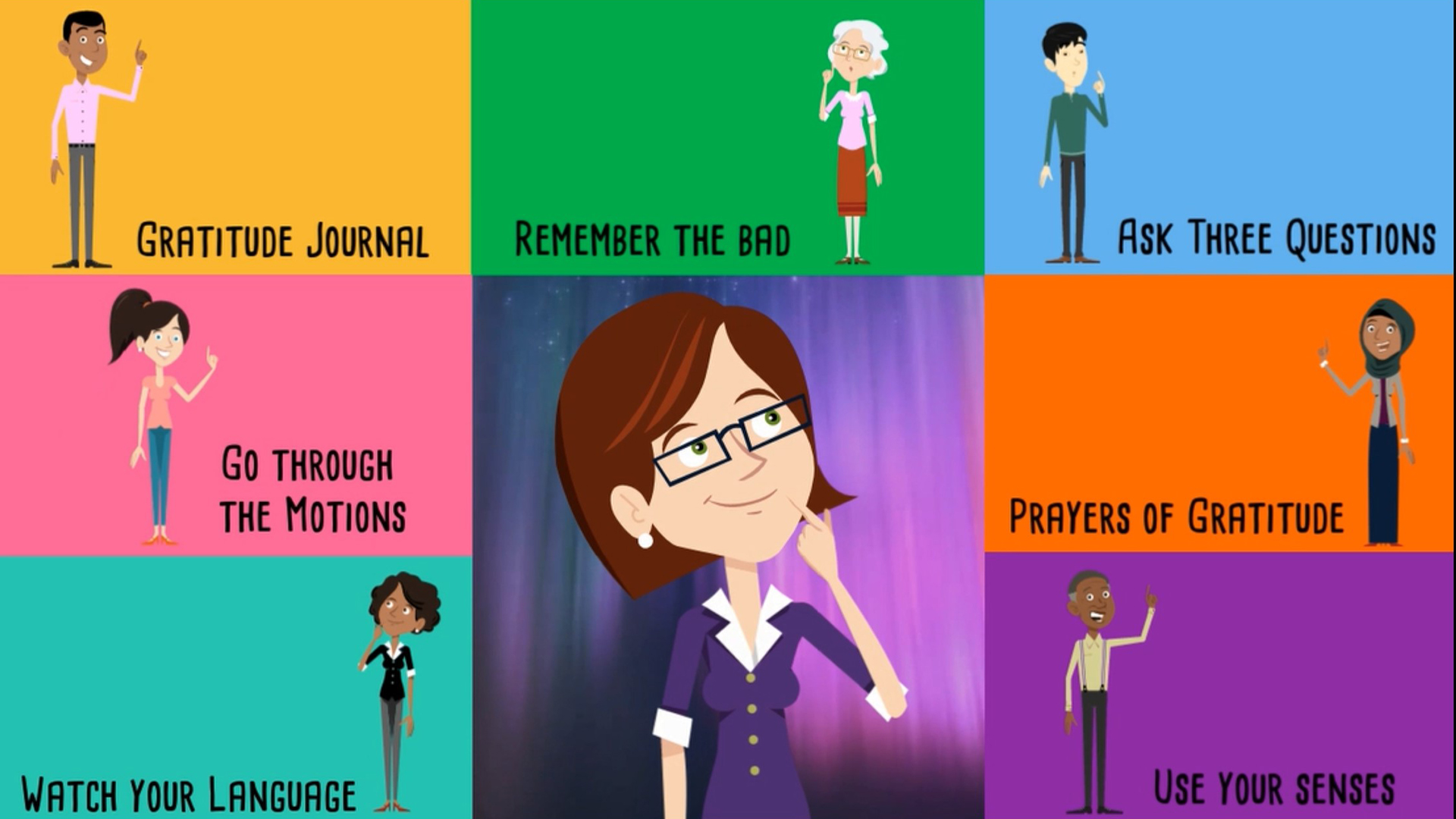
Gratitude practice: 10 ways to be thankful
Developing a gratitude practice radically transforms your outlook and experience of life. Watch this short animation to learn how to practice gratitude fully.
A brief history of the School of Life
Have you heard of The School of Life? Emotional health is one of their main topics which they pursue from different scientific perspectives. Learn more!