Early Childhood Education
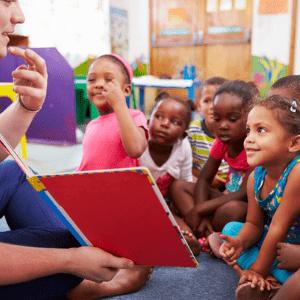
What is early childhood education?
Why is early childhood education important?
Many studies have shown that early childhood education is important because of the long-lasting impact it has on people right into their adulthood. Without it, children tend to do less well in school, have more social problems and will even earn less over the course of the lifetime, on average. As such, it is more than a preparatory stage for school and serves the interests of individuals and society as a whole.
When does early childhood education take place?
The ages at which early childhood education is conducted differs around the world. In North America, for example, it usually means the ages between three and eight. However, in certain European states, it can begin at even younger ages and, in others, go on for longer. In the UK, early childhood education usually ends at the age of five, when children enter mainstream schools.
What developmental theories are behind early childhood education?
There are three main theories that underpin nursery education. One is Piaget’s constructivist theory, which states that children build their own education from within by exploring concepts like logic through experimental play. His ideas are heavily linked to his psychological explanations of children’s cognitive development. Vygotsky’s socio-cultural learning theory explains early childhood education through individual thinking that comes about via social and cultural interactions with other children and teachers. Lastly, Kolb’s experiential learning theory states that children learn via direct experience as individuals with teachers acting as a resource to promote new learning by posing new and interesting questions.
What barriers are there?
Several studies have shown that children who have been exposed to violence or abuse perform less well during their time in nursery education. Indeed, it is also known that where child labour is a practice that this will also have a negative impact on early childhood education. In both the developed and the developing world, poorer children also tend to perform less well during their time spent in education, especially at an early stage. The provision of high-quality education for children before attending school is often, therefore, seen as a social policy tool for developing a more equal society.